


Sarah Adele
Identification of a pathway regulating α-synuclein expression that could be used to develop new therapeutic strategies for Parkinson’s disease.
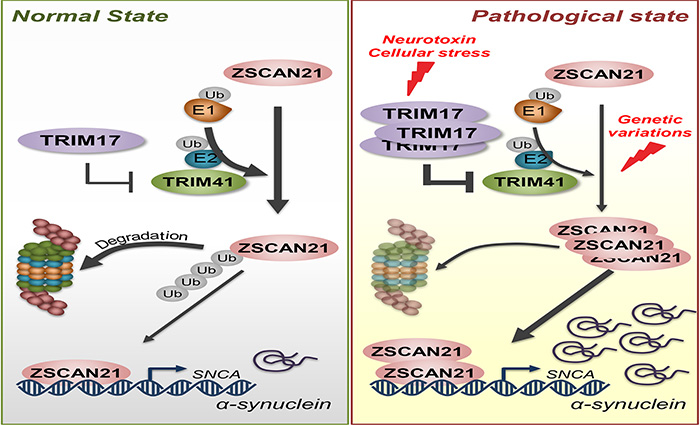
In this work, published in Cell Reports, Lassot et al. (« Molecular Mechanisms of Apoptosis Regulation»; Solange Desagher) describe a pathway regulating α-synuclein expression with in vivo and pathological relevance. Parkinson’s disease (PD) is one of the most common neurodegenerative disorders. Although most cases of PD are sporadic, over 10% are associated with mutations in genes. SNCA, which encodes α-synuclein, … Continue reading Identification of a pathway regulating α-synuclein expression that could be used to develop new therapeutic strategies for Parkinson’s disease.
Two TRIM proteins control the degradation and the anti-apoptotic activity of BCL2A1 in melanoma cells.
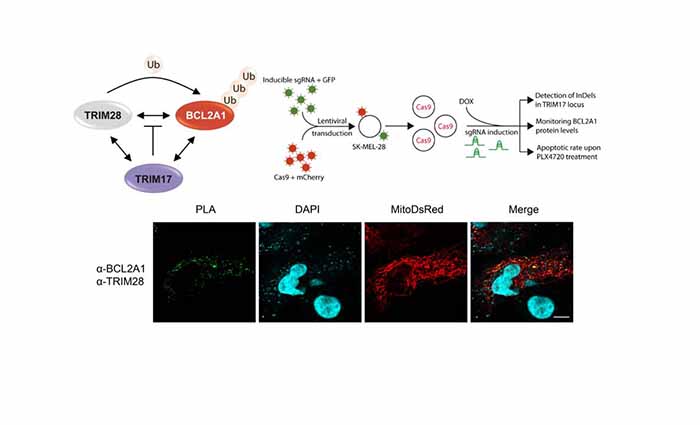
Failure to eliminate cancer cells by apoptosis is crucial in tumor development. Therefore, the key approach to achieving successful antitumor response is to harness strategies allowing the elimination of pro-survival factors to the tumor. BCL2A1 is involved in chemoresistance of melanoma and is not targeted by BH3-mimetic inhibitors. In this study Lionnard et al reveal that TRIM28 and TRIM17 are … Continue reading Two TRIM proteins control the degradation and the anti-apoptotic activity of BCL2A1 in melanoma cells.
HRS-seq : a new genomic method reveals the importance of nuclear bodies in organizing the active chromosomal compartment
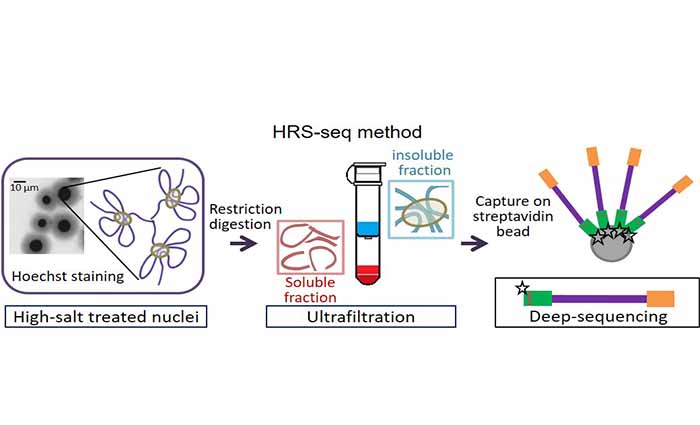
In a work published in Genome Research, Marie-Odile Baudement and its colleagues (team « Genome organization and epigenetic control » led by Thierry Forné), have developed the HRS-seq, a new straightforward genome-wide approach whereby they isolated and sequenced genomic regions associated with nuclear bodies and other membrane-less nuclear organelles which are made insoluble through high-salt treatments (HRS – High-salt Recovered … Continue reading HRS-seq : a new genomic method reveals the importance of nuclear bodies in organizing the active chromosomal compartment
R2TP and R2SP are co-chaperones involved in the assembly of macro-molecular complexes
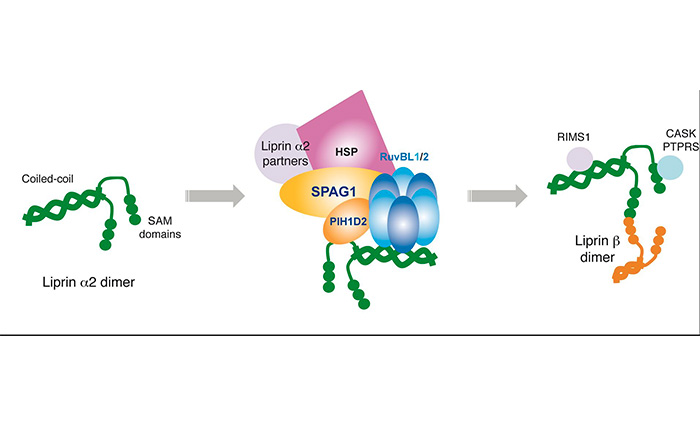
In a Nature Communications publication, Chloé Maurizy and colleagues (E. Bertrand’s team and 3 other teams from ANR consortium snoRNPASSEMBLY) have discovered a novel co-chaperone, called R2SP. It was known that macromolecular complex assembly requires dedicated machinery working with Hsp90. We and others have shown that R2TP/Hsp90 is involved in assembly of essential complexes such as snoRNPs, snRNPs, RNA polymerases … Continue reading R2TP and R2SP are co-chaperones involved in the assembly of macro-molecular complexes
Neutrophils are essential for induction of vaccine-like effects by antiviral monoclonal antibody immunotherapies.
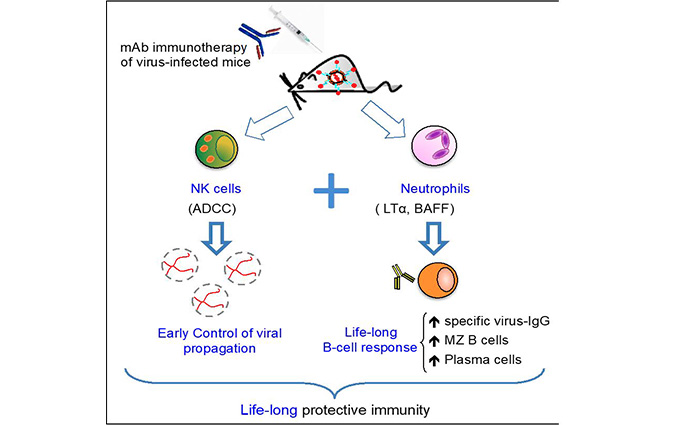
Monoclonal antibodies (mAbs) are the largest class of biomedicines. Administered to neutralize and eliminate pathogens, they can also induce a lasting immune response, such as vaccination. The work of Mar Naranjo-Gomez et al., In the team “Oncogenesis and Immunotherapy” has demonstrated an unexpected role of a type of leukocytes, neutrophils, in the therapeutic efficacy of mAbs. These cells of the … Continue reading Neutrophils are essential for induction of vaccine-like effects by antiviral monoclonal antibody immunotherapies.
Targeting SUMO to improve the efficiency of differentiation therapies in Acute Myeloid Leukemias
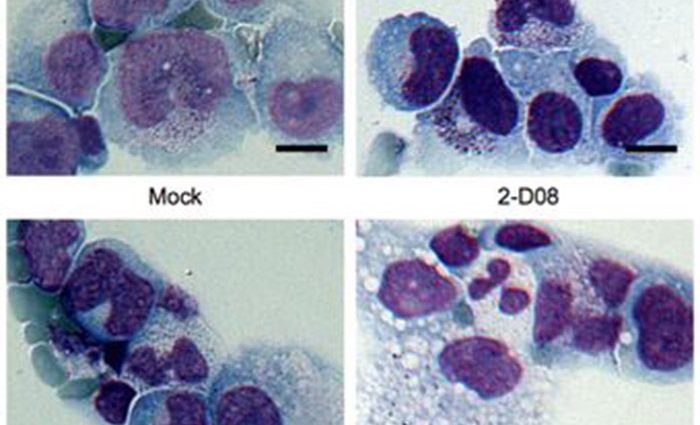
Acute Myeloid Leukemias (AML) are very aggressive hematological malignancies, which treatment is mostly based on intensive chemotherapies. This treatment has not significantly changed in the past 40 years and is characterized by a high relapse rate. Differentiation therapies, in particular those using all-trans retinoic acid (ATRA) are an alternative to chemotherapies. They aim at restoring the differentiation of AML cells … Continue reading Targeting SUMO to improve the efficiency of differentiation therapies in Acute Myeloid Leukemias
Epigenetic Regulation of Imprinted Genes
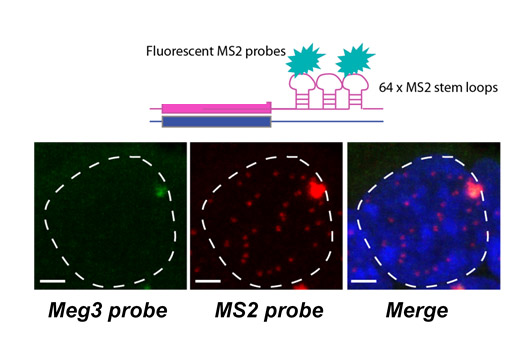
In their study in Cell reports, Ildem Sanli and her co-workers (Robert Feil lab) explore the epigenetic mechanisms involved in the mono-allelic expression of imprinted genes in mammals. The research focuses on a large chromosomal domain in the mouse. Besides the essential expression of a long non-coding RNA (called Meg3), also the Polycomb Repressive Complex-2 is found to be important … Continue reading Epigenetic Regulation of Imprinted Genes
Marc Sitbon is a MUSE laureate for TheranosMet.
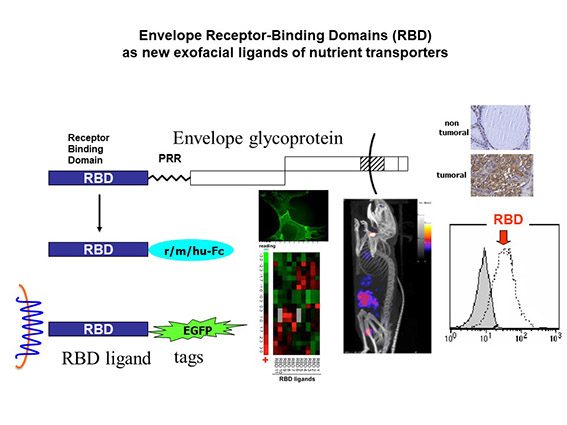
TheranosMet is one of the 8 laureates in Biology & Health of the first call for research projects by MUSE (Montpellier Université d’Excellence). The 3-year MUSE program includes support for a PhD student. TheranosMet focuses on the theranostic use of RBD nanoparticles. RBDs are Receptor-Binding Domains derived from retroviruses that target nutrient transporters. RBDs that bind transporters known to play … Continue reading Marc Sitbon is a MUSE laureate for TheranosMet.