

Sarah Adele
Transcription that (almost) never ends
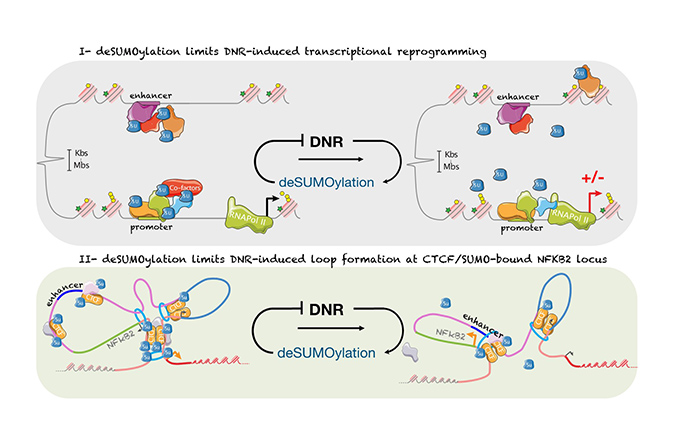
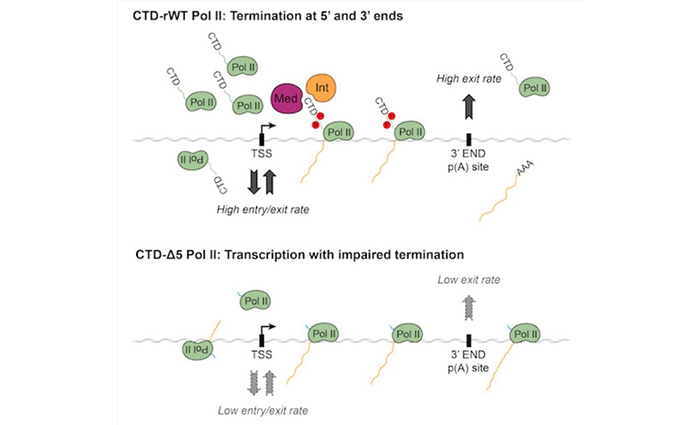
The team of JC Andrau team has characterized at the genomic scale that a CTD-depleted RNA Polymerase II can still transcribe but cannot terminate transcription anymore. This results in a massive read-through phenotype, over hundreds of kb, at both ends of transcriptional units. Further on, without CTD, Pol II loses its interaction with both Mediator and Integrator complexes that most … Continue reading Transcription that (almost) never ends

TAKING CHARGE OF THE METAglut1 BLOOD TEST FOR THE DIAGNOSIS OF DE VIVO DISEASE
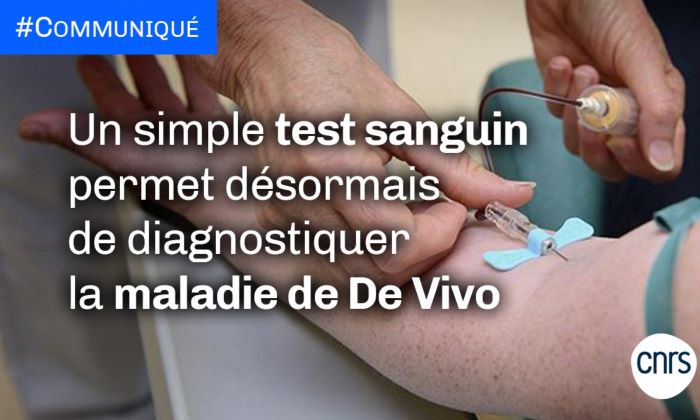
The collaboration between several teams from AP-HP, l’IGMM Institut de Génétique Moléculaire de Montpellier (CNRS/Université de Montpellier) and Metafora-Biosystems is a success: for the first time, a diagnostic test, METAglut1, has received a positive decision from Haute Autorité de Santé permitting the reimbursement of its costs by health insurance companies. METAglut1, a fast, reliable blood test, provides an early diagnosis … Continue reading TAKING CHARGE OF THE METAglut1 BLOOD TEST FOR THE DIAGNOSIS OF DE VIVO DISEASE
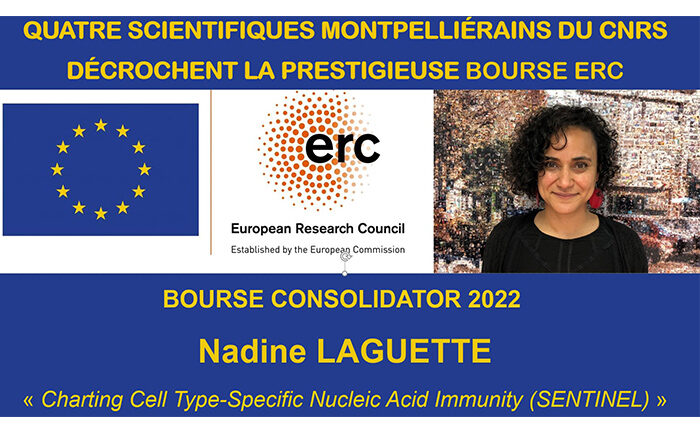
Four CNRS Scientists from Montpellier receive the prestigious ERC grant
Nadine Laguette, winner of the Consolidator 2022 grant for her research project “Charting Cell Type-Specific Nucleic Acid Immunity (SENTINEL)” which aims to study the communication between innate immunity and essential fatty acid metabolism pathways, using adipose tissue as a model. This project will also allow the study of new pathways involved in the regulation of inflammatory responses in … Continue reading Four CNRS Scientists from Montpellier receive the prestigious ERC grant
PROJECT
Molecular basis of the cross-talk between chronic inflammation and cancer.* ERG Starting Grant (CrIC; GA #637763) ~ 1.5 M€ ~ 2015-2021 → ERC Proof of Concept 2019: Decreasing Pancreatic Adenocarcinoma-related Inflammation using small molecule inhibitors of STING. ** (DIM-CrIC ; GA #893772) ~150 k€ Synopsis: The CrIC project aimed at identifying the molecular mechanisms at play in the onset and … Continue reading PROJECT